| Abiu - Pouteria caimito | |||||||||||||||||||||||||||
|---|---|---|---|---|---|---|---|---|---|---|---|---|---|---|---|---|---|---|---|---|---|---|---|---|---|---|---|
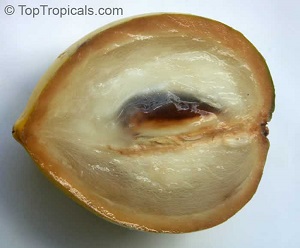
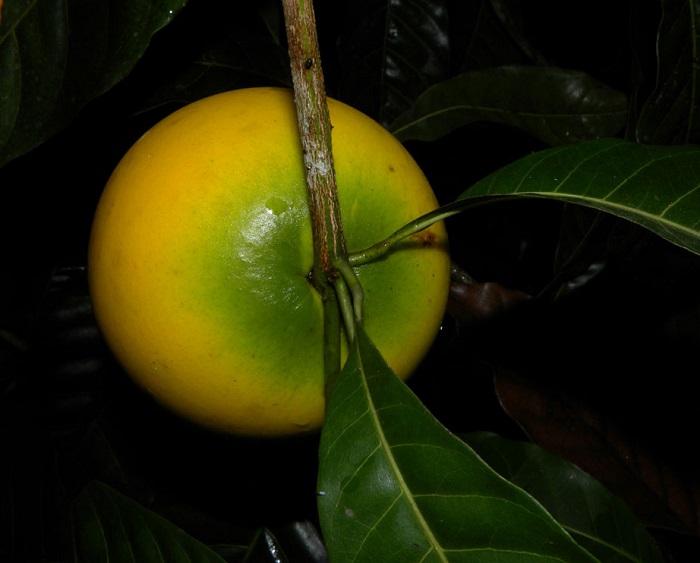
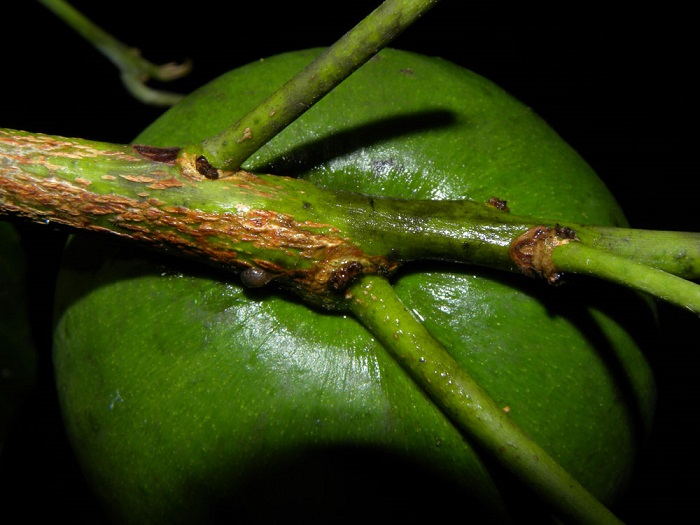
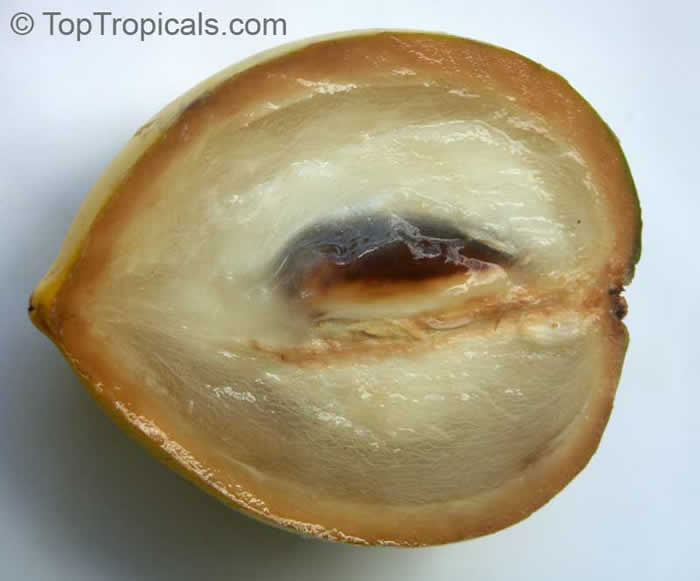
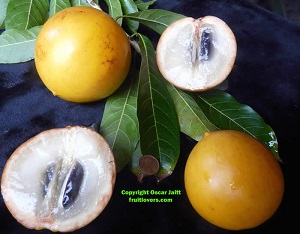 Fig. 1 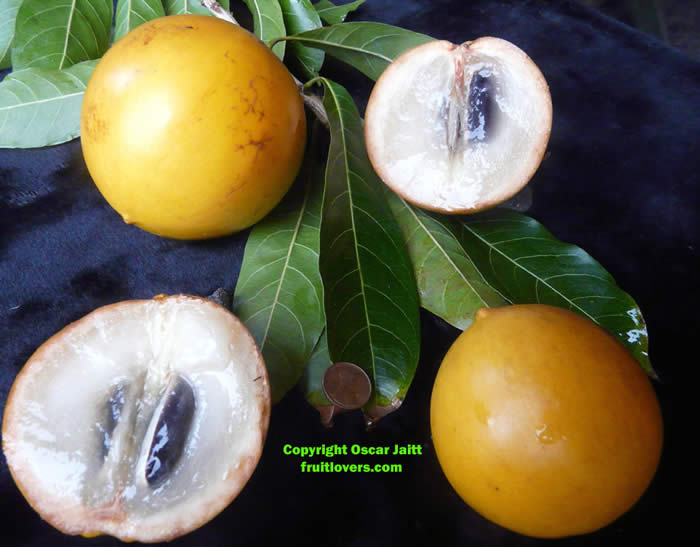 Pouteria caimito Abiu cross section  Fig. 2 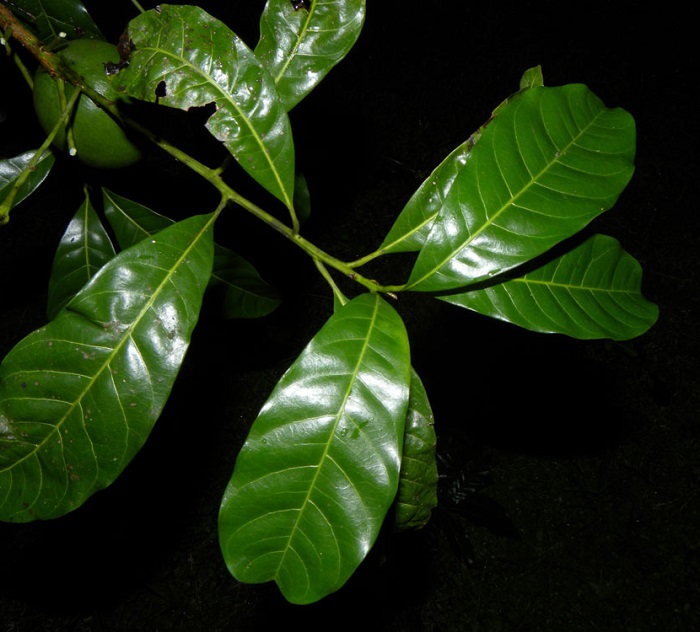 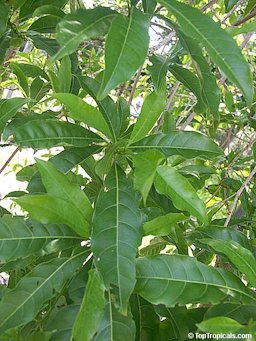 Fig. 3 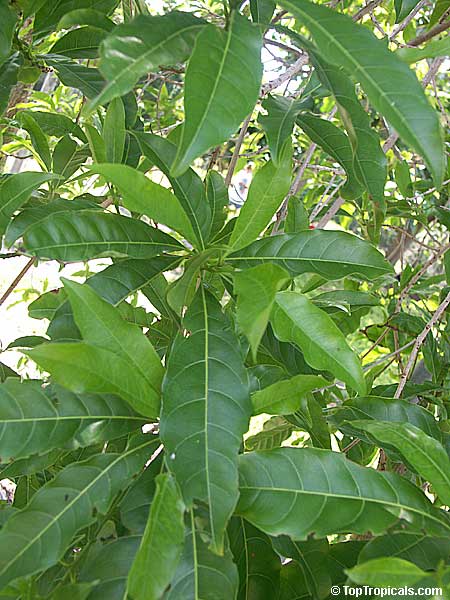 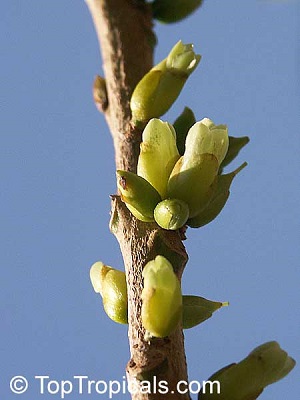 Fig. 7 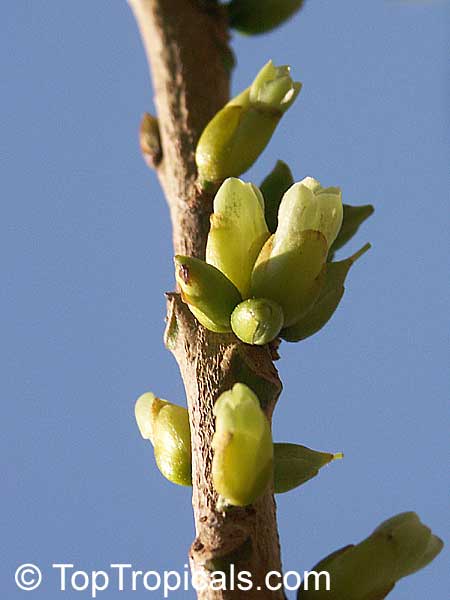 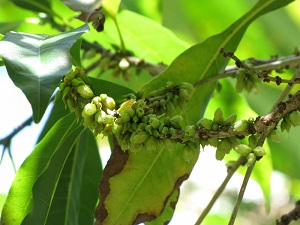 Fig. 8 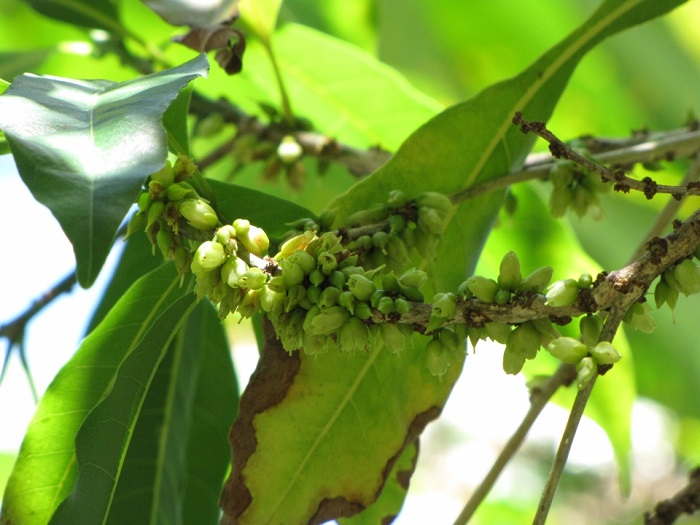 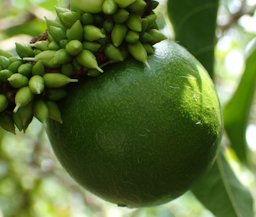 Fig. 10 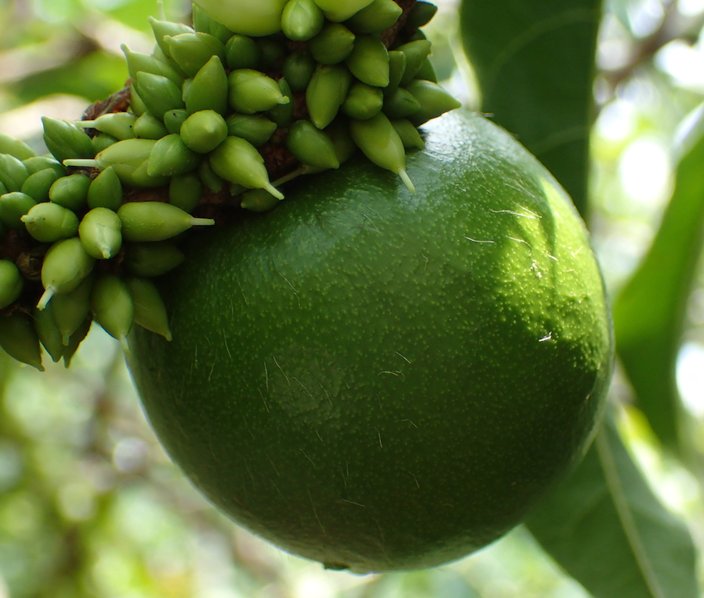 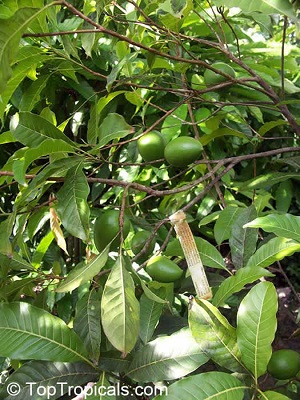 Fig. 11 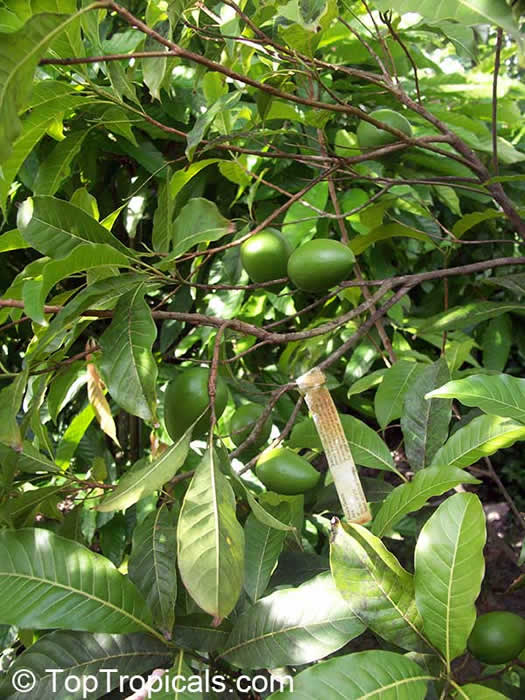 Immature fruit and leaves  Fig. 12 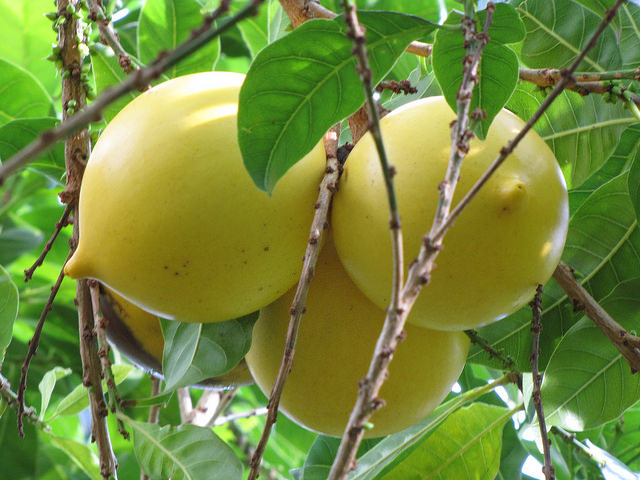 P. caimito (abiu fruit), habit at Pali, Waipio, Maui, Hawai'i 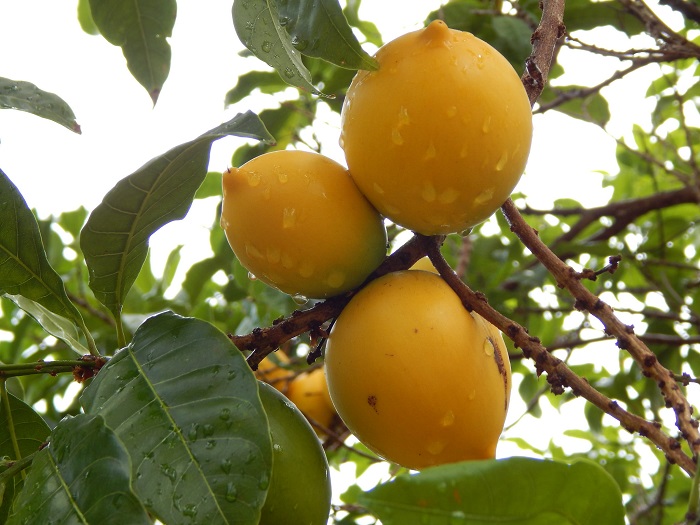 Fig. 13 Abiu, Peru 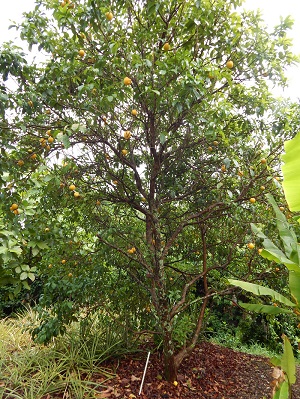 Fig. 21 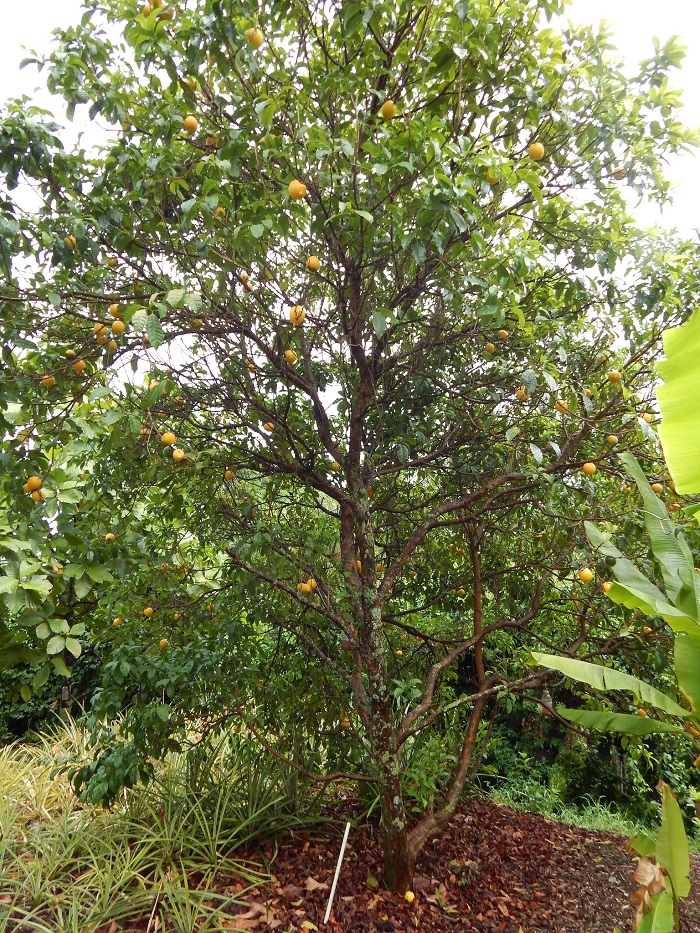  Fig. 22 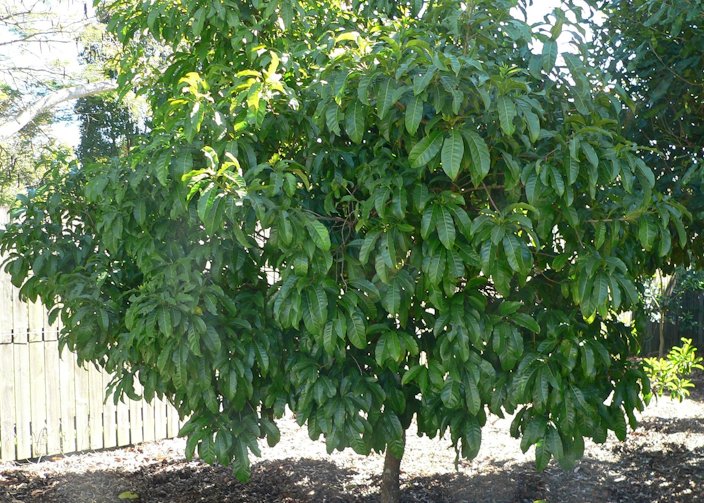 Abiu Pouteria caimito, Australia 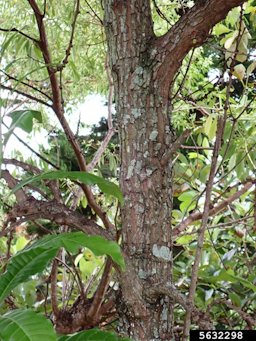 Fig. 23 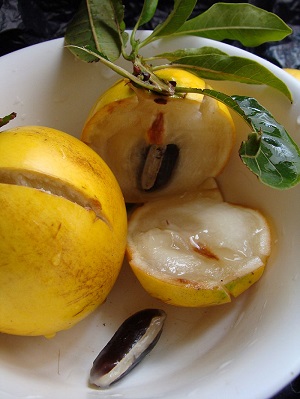 Fig. 24 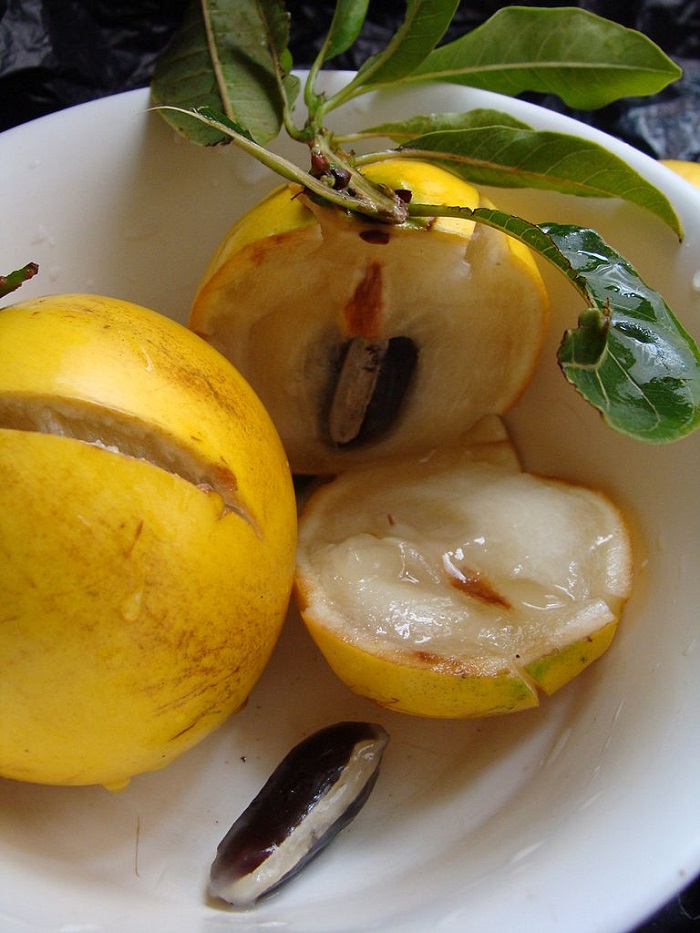 Fruta do Abieiro, P. caimito  Fig. 26 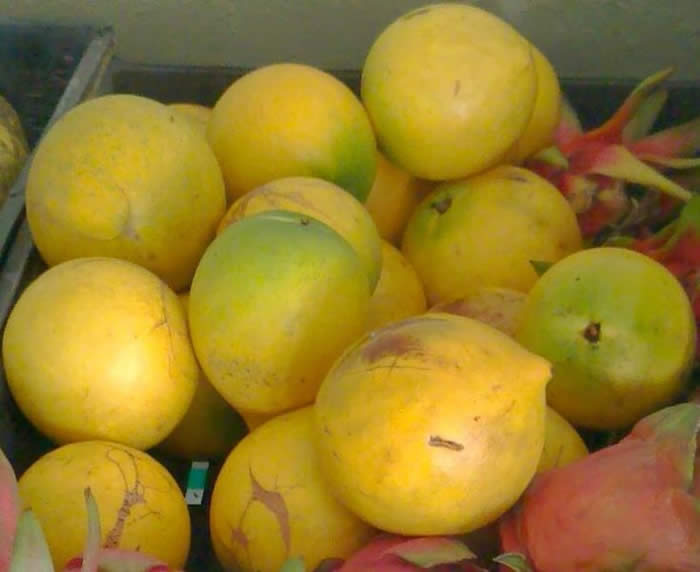 Abiu fruits for sale in August in southern Florida, USA  Fig. 27 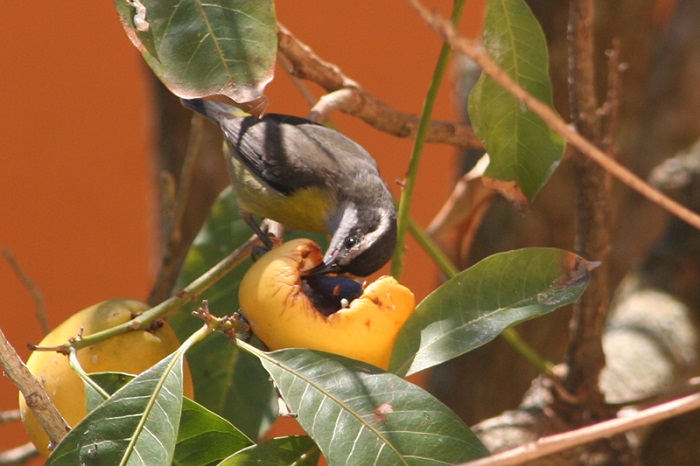 Bananaquit (Coereba flaveola) eating abiu fruit, Blumenau, Brazil |
Scientific
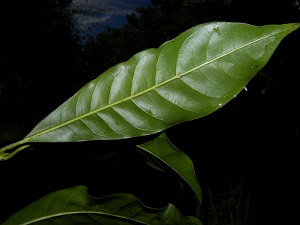
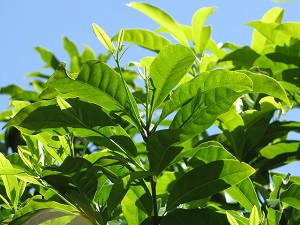
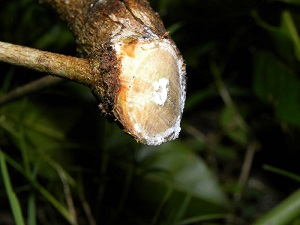
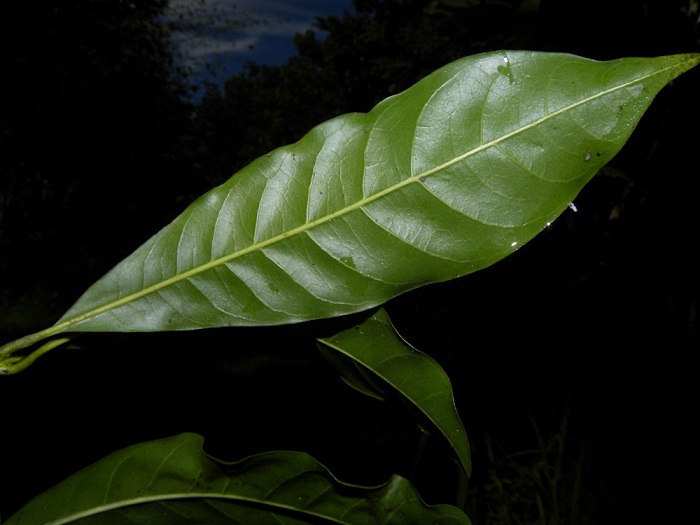
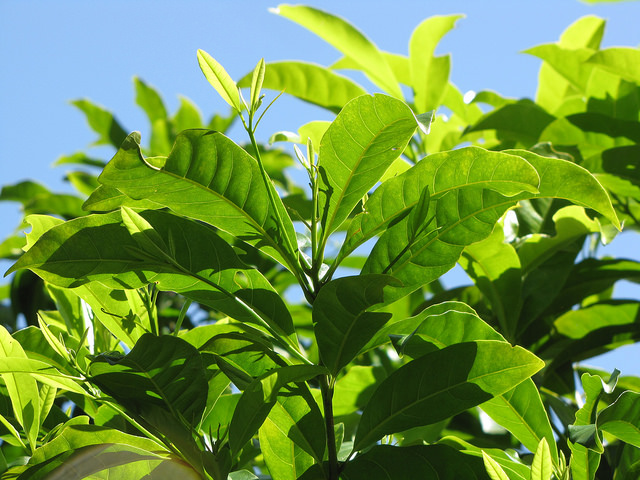
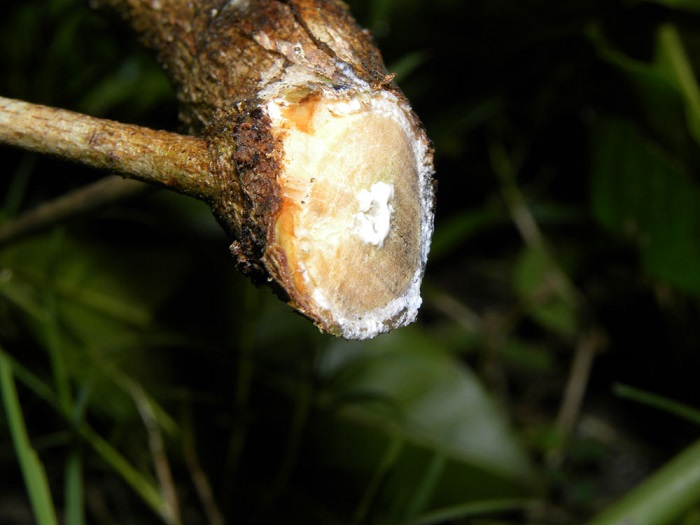
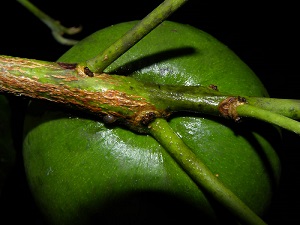
name Pouteria caimito (Ruiz & Pav.) Radlk. Common names English: Abiu, yellow sapote; Columbia: amarilla, madura verde; Ecuador: cauje, luma; Venezuela: temare; Brazil: caimito, caimo, cauje, abiurana, abi, abio, abieiro 1 Synonyms Achras caimito Ruiz & Pav., Guapeba caimito (Ruiz & Pav.), Labatia caimito (Ruiz & Pav.) Mart., Lucuma caimito (Ruiz & Pav.) Roem. & Schult, Achras guapeda Casar, Guapeba lasiocarpa (Mart.), Guapeba laurifolia Gomes, Guapebeira laurifolia Gomes, Labatia lasiocarpa Mart., Labatia reticulata Mart., Lucuma lasiocarpa (Mart.) A.DC., Lucuma laurifolia (Gomes) A.DC., Lucuma laurifolia var. reticulata (Mart.) A.DC., Lucuma temare Kunth, Pouteria caimito var. laurifolia (Gomes) Baehni, Pouteria lasiocarpa (Mart.) Radlk., Pouteria laurifolia (Gomes) Radlk., Pouteria leucophaea Baehni, Pouteria temare (Kunth) Aubrév., Richardella temare (Kunth) Pierre 11 Relatives Bully tree, P. multiflora; caimito, Chrysophyllum cainito; caimitillo, P. speciosa; canistel, P. campechiana; cinnamon apple, P. hypoglauca; curiola, P. torta; fruteo, P. pariry; green sapote, P. viridis; macarancluba, P. ramiflora; mamey sapote, P. sapota; lucmo, P. obbovata; lucma, P. macrophylla; nispero montanero, P. macrocarpa; satin leaf, C. oliviforme; sapodilla, Manilkara zapota Family Sapotaceae (sapodilla family) Origin Native to the western Amazon region of South America 10 USDS hardiness zones 10-12, less hardy than the canistel and sapodilla Uses Used fresh, in salad with other fruit; ripe pulp can be added to sherbets, jams, yogourt or dried Height 30-40 ft (9-12 m); up to 115 ft (35 m) in tropical areas 1 Spread Pyramidal Crown Dense, pyramidal or rounded crown Plant habit Secondary and tertiary branches are generally willow-like (thin and long); when heavy with fruit, hang downward 1 Longevity It can bear fruit for 20 years 6 Trunk/bark/branches Rough grey to brown bark; exudes white latex when cut 6 Pruning requirement Keep low to facilitate harvesting 6 Leaves Evergreen; alternate, oblong to elliptic; 4-8 in. (10-20 cm) long and 1 1/4to 2 3/8 in. (3-6 cm) wide 1 Flowers Small with four to five cylindrical petals; white to greenish; hermaphroditic, meaning they are both sexes; open in the morning and can stay open for about two days 2 Fruit Berry; round to oval with a point; smooth bright yellow skin; inside is translucent, white; creamy/ jelly-like texture 1 Season Aug.-Oct. 3 Crop The amount of fruit produced varies greatly among abiu seedling trees 1 Light requirement Full sun or dappled shade Soil tolerances Fertile, well-drained soils; trees growing in high-pH, alkaline soils may develop iron deficiency pH preference 5.5-7.5 Drought tolerance The tree is able to withstand seasonal drought 9 Cold tolerance Young trees may be killed below 32 °F (0 °C); mature trees at 29-31 °F (-0.5 to -1.6 °C) 1 Soil salt tolerance Tolerates many pH levels but it is sensitive to saline water or soils 9 Plant spacing Should be planted at least 25 ft (7.6 m) from nearby trees and structures Invasive potential * None reported Pest resistance Few insect pests attack abiu, however, as the number of trees increases, various insects will most likely be found feeding on abiu Known hazard None reported Reading Material Abiu Growing in the Florida Home Landscape, University of Florida pdf Abiu, Fruits of Warm Climates Abiu, University of Hawai'i at Mānoa pdf Abiu, Manual Of Tropical And Subtropical Fruits Abiu - Pouteria caimito, Sub-Tropical Fruit Club of Qld Origin The abiu is a denizen of the headwaters of the Amazon. It grows wild on the lower eastern slopes of the Andes from southwestern Venezuela to Peru. It is often cultivated around Iquitos, Peru. In Ecuador, it is common in the Province of Guayas and the fruits are sold in the markets of Guayaquil. It is much grown around Pará, Brazil; less frequently near Rio de Janeiro, and to a limited extent at Bahia. In Colombia, it is fairly common in the regions of Caquetá, Meta and Vaupés and it abounds in the adjacent areas of Amazonas, Venezuela. It has been growing for many years in Trinidad. 5 Description The abiu is a medium, evergreen tree, resembling its cousin, the canistel, on overall shape and habit of growth. The ultimated size of the tree in Florida has not been established, although mature specimens typically measure 30 feet of more. Like many species within the Sapotaceae family, the abiu exudes sticky latex when twigs are broken or when the bark is cut (Fig. 6). 8 Leaves The leaves are alternate and highly variable; may be ovate-oblong, obovate or elliptic; 4 to 8 in (10-20 cm) long, 1 1/4 to 2 3/8 in (3-6 cm) wide; short-pointed at the apex, sometimes long-tapering at the base; smooth or with a few scattered hairs. 5
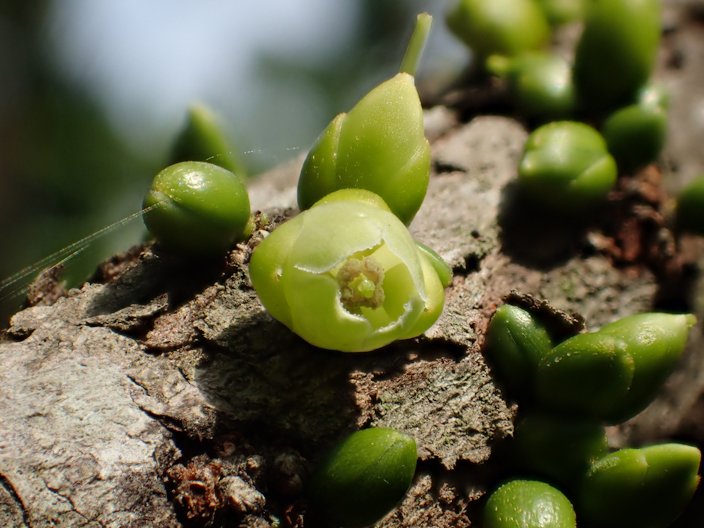
Fig. 6. Latex exuding from a cut branch Flowers The flowers are small and white and appear singly or in clusters at the axil of the leaf or leaf scar, and a branch may have up to 280 flowers. Abiu does not appear to need a dry period to trigger flowering. 7
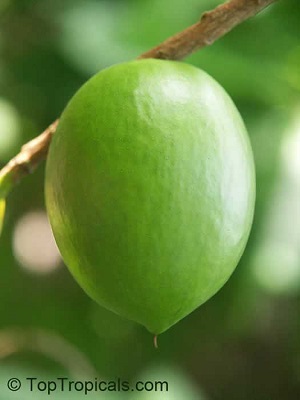
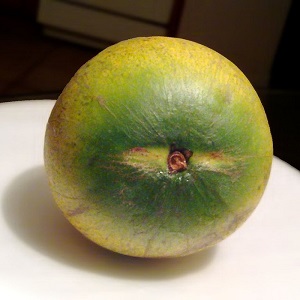
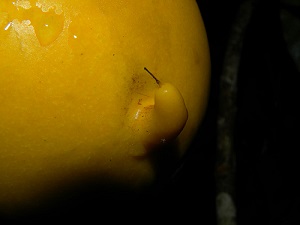
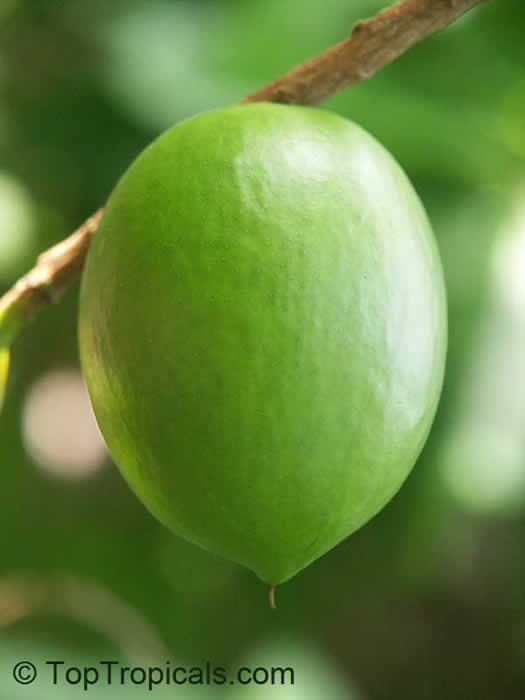
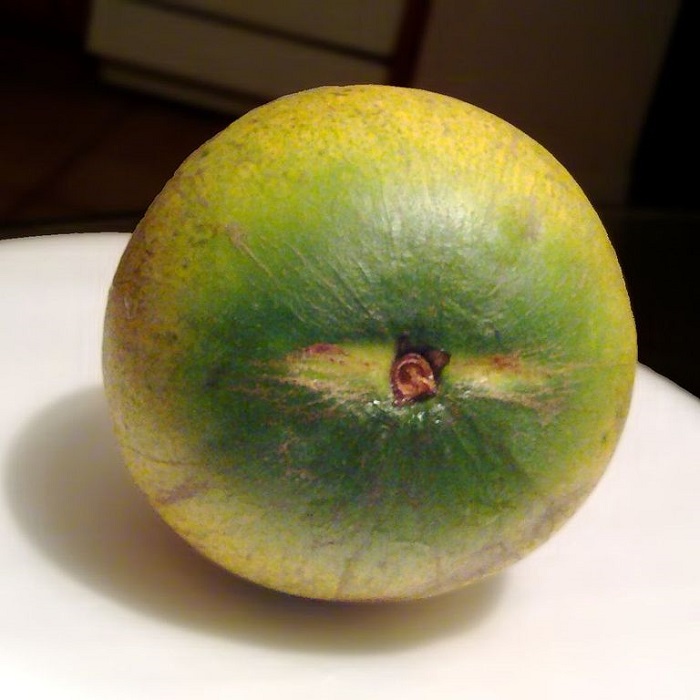
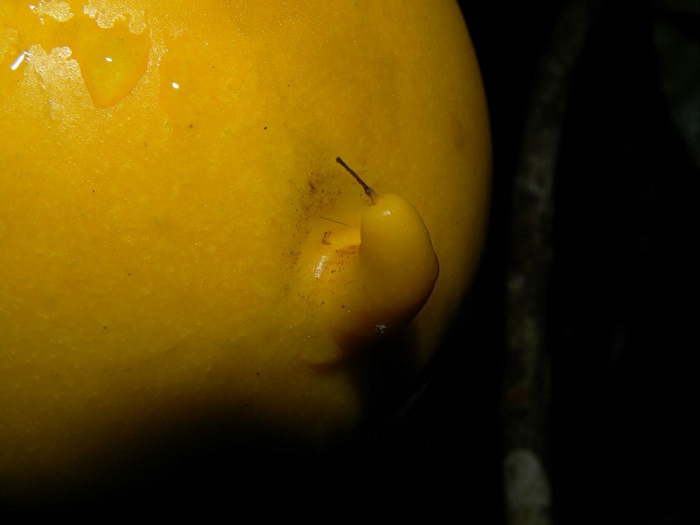
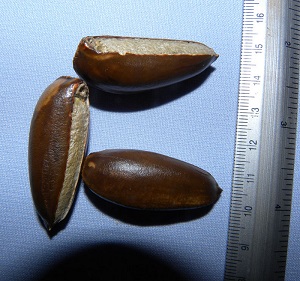
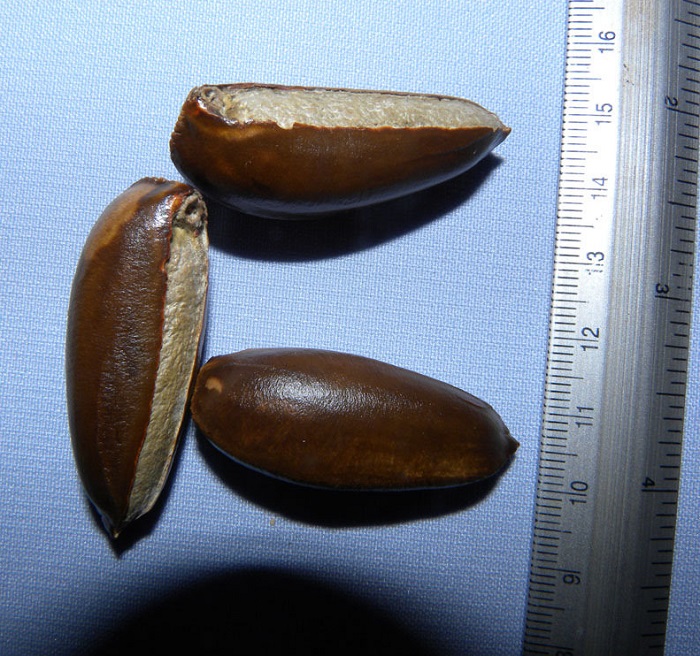
Fruit Abiu fruit is a berry, with a smooth, leathery skin, 0.12-0.2 in. (3-5 mm) thick, containing an irritant latex when the fruit is green. 7 The fruit, downy when young, is ovoid, elliptical or round; 1 1/2 to 4 in (4-10 cm) long, sometimes having a short nipple at the apex; with smooth, tough, pale-yellow skin when ripe and fragrant, white, mucilaginous, translucent, mild-flavored pulp containing 1 to 4 brown oblong seeds, with a pale hilum on one side. Until fully ripe, the fruit is permeated with latex and is very gummy and astringent. 5 Full ripening occurs in 1–5 days, when the fruit pulp does not have the sticky latex. The translucent flesh becomes jelly-like, with a pleasant, somewhat caramel-flavored pulp. 9 The fruit has a thin skin that bruises easily, so the fruit will not store for more than a few days. 12
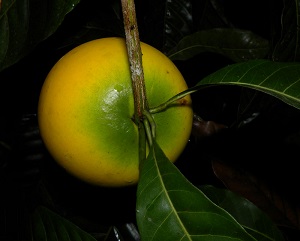
Fig. 14. Abiu unripe Fig. 15. The abiu fruit stem is short and separates flush with the fruit Fig. 16. Sometimes the fruit a short nipple at the apex Fig. 20. Seeds showing the pale hilum on one side Varieties There are a number of abiu varieties (e.g., 'Caribou', 'Gray', 'Z-2'); however, few selections or varieties are available in Florida. 1 Harvesting As abiu fruit mature, the peel changes from green to light green and then yellow, indicating it is ready to pick. Abiu should only be picked when fully mature, i.e., partial color break to full yellow color; however, fruit with a dark golden color are overripe. Fruit picked before fully mature contain a large amount of sticky, white latex, making consumption unpleasant. 1 The amount of fruit produced varies greatly among abiu seedling trees. Some mature seedling trees may produce little fruit; others yield 400 lbs (182 kg) of fruit per year. 1 Pollination No specific information on the pollination requirements or pollinators (insects) of abiu has been documented. Flying insects are probably the pollinators. 1 Propagation Abiu is commonly propagated by seed; seedling trees usually begin fruit production in 3 to 4 years after planting. Once extracted from the fruit, abiu seeds do not remain viable for more than a couple of days and should therefore be planted as soon possible into clean, well-drained media. Seedling trees come into production in 2 to 5 years from planting. Abiu may also be grafted or budded onto seedling rootstocks and begin fruiting in 1 to 2 years. 1 Almost always by seeds, which germinate quickly when fresh. Seedling trees show considerable variation in fruit growth. Fruiting from seed can be expected in 3+ years. Grafting and Air-Layering are used to propagate superior strains. Planting Abiu grows best in hot, humid, tropical climates with well distributed rainfall; quite drought tolerant if protected from cold or dry winds by a windbreak. Abiu trees are sensitive to cool, non-freezing temperatures and windy conditions, and should be planted only in warm, wind-protected areas. 1 Pruning Young abiu trees should be trained to form 3 to 5 main scaffold limbs during the first 2 to 3 years after planting. Mature trees should be maintained at 8 to 12 ft (2.4-3.7 m) by annual, selective removal of poorly placed and upright limbs. 1 Irrigation The tree needs supplemental irrigation for good yields and fruit size, if grown in arid areas or areas with low rainfall. 9 Pests Page Food Uses The fruit of the abiu tree is edible and considered one of the best of the sapotesdue to having the sweet caramel-like taste of sapodilla with a smoother texture. It is commonly eaten out of hand and, although in Colombia those eating the fruit this way are advised to grease their lips to keep the gummy latex from sticking, this hazard can be avoided by selecting fully ripe fruits and scooping out the flesh with a utensil. The tartness of a bit of added lime juice may enhance the flavor, especially when chilled. The melting sweet pulp of the abiu is also used to flavor ice cream and cut into yogurt for a light and delicious breakfast. The subtlety of the flavor limits its utility in more complex confections and salads. Abiu fruit is a significant source of calcium, phosphorus, vitamin A, and vitamin C. 4
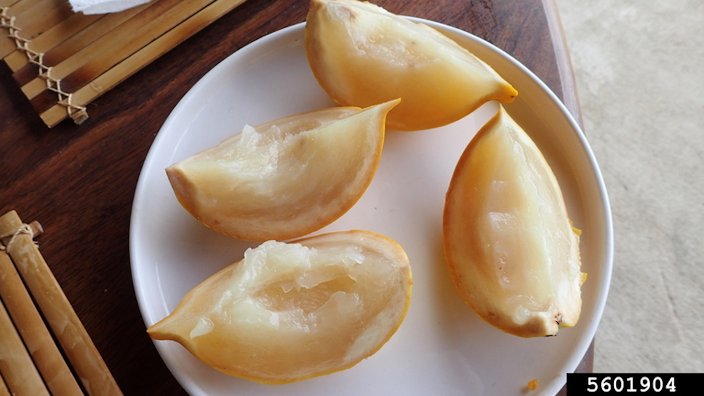
Fig. 25. Abiu quartered with large seed removed from center Nutrients The fruit is rich in vitamins and minerals: thiamine 0.2 mg, riboflavin 0.2 mg, niacin 3.4 mg, vitamin C 49 mg, calcium 22 mg and iron 1.8 mg. 7 Medicinal Properties ** In Brazil, the pulp, because of its mucilaginous nature, is eaten to relieve coughs, bronchitis and other pulmonary complaints. The latex is given as a vermifuge and purge and is applied on abscesses. 5 Other Uses The wood is dense and heavy, hard, and valued for construction. 5 Other Edibles in the Pouteria Genus Canistel, P. campechiana Green Sapote, P. veridis Mamey Sapote, P. sapota Further Reading The Abiu, Archives of the Rare Fruit Council of Australia One of the Best Sapotaceous Fruits, Archives of the Rare Fruit Council of Australia The Gray Abiu, Archives of the Rare Fruit Council of Australia A Local Experience with the Abiu, Archives of the Rare Fruit Council of Australia Older Material Two New Fruits for Cultivation in South Florida, Florida State Horticultural Society, 1964 pdf Abiu Botanical Art List of Growers and Vendors |
||||||||||||||||||||||||||
| Bibliography 1 Crane, Jonathan H., and Carlos F. Balerdi. "Abiu Growing in the Florida Home Landscape." Horticultural Sciences Dept., UF/IFAS Extension, Original pub. Jan. 2006, Revised Nov. 2016, Reviewed Dec. 2019 and 23 July 2023, doi.org/10.32473/edis-hs300-2006, AskIFAS, edis.ifas.ufl.edu/hs300. Accessed 25 Apr. 2017, 28 July 2020, 11 Oct. 2025. 2 "Pouteria caimito." wikimedia.org. Accessed 13 Dec. 2013. 3 Chay, Patricia. "About abiu." Queensland Government Primary Industries and Fisheries, Retrieved 14 August 2011, wikimedia.org. Accessed 13 Dec. 2013. 4 Popenoe, Wilson. Manual Of Tropical And Subtropical Fruits. 1920, London, Hafner Press, 1974. 5 Fruits of Warm Climates. Julia F. Morton, Miami, 1987. 6 Love, Ken, and Robert E. Paull. "Abiu." Hawai'i Tropical Fruit Growers, CTAHR Department of Tropical Plants and Soil Sciences, June 2011, ctahr.hawaii.edu. Accessed 8 Mar. 2016. 7 Lim, T. K. "Abiu - Pouteria caimito." Sub-tropical Fruit Club of Qld Inc. Feb. 2006, stcf.org.au. Accessed 9 Mar. 2016. 8 Boning, Charles R. Florida's Best Fruiting Plants- Native and Exotic Trees, Shrubs, and Vines. Sarasota, Pineapple Press, 2006. 9 Duarte, Odilo, and Robert E. Paull. Exotic Fruits and Nuts of the New World. Cambridge, CABI, 2015. 10 Blancke, Rolf. Tropical Fruits and Other Edible Plants of the World: An Illustrated Guide. China, Comstock Publishing Associates, a division of Cornell University Press, 2016. 11 "Pouteria caimito synonyms." Plants of the World Online, Facilitated by the Royal Botanic Gardens, POWO, (CC BY 3.0), powo.science.kew.org/taxon/788845-1#synonyms. Accessed 9 Oct. 2025. 12 Lorenzi, Harri. Brazilian Trees, A Guide to the Identification and Cultivation of Brazilian Native Trees. Vol. 2. 2nd ed., Nova Odessa, Instituto Plantarum de Estudos da Flora, 2002. Photographs Fig. 1 Starr, Forest, and Kim. "Pouteria caimito (Abiu fruit), fruit in half showing seeds and pulp, Pali o Waipio Huelo, Maui." Starr Environmental, 140925-2022, 25 Sept. 2014, (CC BY 4.0), www.starrenvironmental.com/images/image/?q=25246684495. Accessed 12 Oct. 2025. Fig. 2,4,6,16,17,18,20 Aguilar, Reinaldo. "Pouteria caimito (Ruiz & Pav.) Radlk. (Cultivado)." Flickr, 2012, (CC BY-NC-SA 2.0), flickr.com. Accessed 9 Mar. 2016. Fig. 3,5,7,11,14,19 "Pouteria caimito, Abiu." TopTropicals, toptropicals.com. Accessed 13 Dec. 2013. Fig. 8,9,10 leaf0605, 葉子. "Abiu Pouteria caimito." iNaturalist, Public Domain, Image cropped, www.inaturalist.org/observations/35739529. Accessed 10 Oct. 2025. Fig. 12 Starr, Forest, and Kim. "Pouteria caimito. Fruiting habit at Pali o Waipio Huelo, Maui, Hawai'i." Flickr, 8 Nov. 2012, (CC BY 4.0), flickr.com/photos/starr-environmental/24565733254/. Accessed 9 Mar. 2016. Fig. 13 Yakovlev, Dr. Alexey. "Pouteria caimito, Peru." INaturalist, Research Grade, 30 Jan. 2024, (CC BY-NC 4.0), Image cropped, www.inaturalist.org/observations/197958906. Accessed 10 Oct. 2025. Fig. 15 Pouletic. "The Abiu fruit stem is short and separates flush with the fruit." Wikimedia Commons, 2011, (CC BY-SA 3.0.0), commons.wikimedia.org/wiki/File:Abiu_fruit_stem_end.jpg. Accessed 10 Mar. 2016. Fig. 21 Starr, Forest, and Kim. "Pouteria caimito (Abiu fruit). Habit Pali o Waipio Huelo, Maui, Hawai'i." Flickr, 25 Sept. 2014, (CC BY 4.0),, flickr.com/photos/starr-environmental/24616020234/. Accessed 9 Mar. 2016. Fig. 22 "Abiu Pouteria caimito." The Rare Fruit Club WA, www.rarefruitclub.org.au/wp/fruit-trees/pouteria-caimito/?highlight=abiu. Accessed 10 Oct. 2025. Fig. 23 Cranshaw, Whitney. "Abiu (Pouteria caimito (Ruiz & Pav.) Radlk.) trunk." Colorado State University, no. 5632298, 10 Dec. 2024, Bugwood.org, (CC BY-NC 3.0 US), www.forestryimages.org/browse/image/5632298. Accessed 10 Oct. 2025. Fig. 24 Magaldi, Ana. "Fruta do Abieiro, Pouteria caimito." Wikimedia Commons, 2009, commons.wikimedia.org. Accessed 10 Mar. 2016. Fig. 25 Cranshaw, Whitney. "Abiu (Pouteria caimito (Ruiz & Pav.) Radlk.) quartered with large seed removed from center." Colorado State University, no. 5601904, 22 Nov. 2020, Bugwood.org, (CC BY-NC 3.0 US), www.forestryimages.org/browse/image/5601904. Accessed 10 Oct. 2025. Fig. 26 Pouletic. "Abiu fruits for sale in August in southern Florida, USA." Wikimedia Commons, 2011, (CC BY-SA 3.0), commons.wikimedia.org. Accessed 10 Mar. 2016. Fig. 27 Jailson. "Bananaquit eating abiu fruit from Blumenau, Brasil." Wikimedia Commons, 2007, (CC BY 2.0), commons.wikimedia.org/wiki/File:Abiu.jpg. Accessed 10 Mar. 2016. * UF/IFAS Assessment of Non-native Plants in Florida's Natural Areas ** Information provided is not intended to be used as a guide for treatment of medical conditions. Published 4 Dec. 2014 LR. Last update 11 Oct. 2025 LR |
|||||||||||||||||||||||||||